opening winter
Feyre Hunts Andras
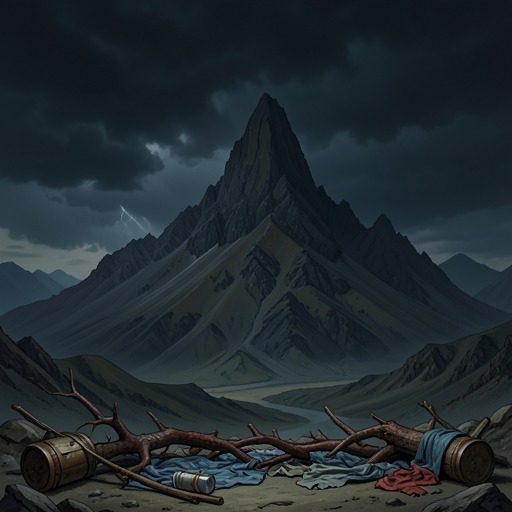
Fei Archelon hunted deep into the winter forest because of hunger and her responsibility towards her poor family. She found a large wolf tracking a mother deer, shot it with an arrow made of mountain ash, sold its skin, and took the deer home
the same winter evening
The Archeron Family’s Poverty
Fei Archelon returned to her family's cottage with food, only to find that Nastya Archelon and Elaine Archelon were still waiting for her to bear almost all the responsibility of supporting the family. Her father remains disabled and inactive, while Fei's sisters argue about clothes and marriage
the following night
The Treaty’s Hidden Debt
A strange high spirit came to Fey's cottage and asked who had killed the wolf. Fey Archelon admitted responsibility, even though the creature explained that the human spirit treaty required humans to pay with a life if they attacked spirits without cause; she still refused to soften her hatred toward the spirit. The beast
two days after leaving home
Feyre Enters Prythian
The beast rode a white mare to escort Fei Archelon north, and with magic, kept her mostly unconscious during the journey. She entered Pruthien, arriving at a large, spring-scented manor, whose beauty contrasted sharply with her human homeland, shrouded in winter
Feyre’s first day at Tamlin's Estate
Tamlin Reveals Himself
The beast became the high fae lord [Tamlin](entity:character-recall-character-tamlin-29f489f93b8d) wearing a mask, while Lucien Vossar arrived to ask how Andreas died. Tamlin told Lucien that Fey Archen is protected by the fae-human treaty and ordered anyone not to harm her. Fey Archen did not believe their hospitality
the first week in Prythian
The Spring Court’s Empty House
Fei Archelon explored [Tamlin](entity:character-recall-character-tamlin-29f489f93b8d) manor, noticing the silence, the empty court, and the unusual scarcity of daily household activities. Tamlin explained that a magical catastrophe weakened the power and disrupted the entire Pruhyen border. He described the magical catastrophe as a spreading disease, yet concealed
early spring, during a hunt
Feyre Encounters The Bogge
[Lucien Vanserra](entity:character-recall-character-lucien-vanserra-45b20b0acb60) was patrolling with Fei Archelon when they encountered the Borg. This being only becomes a real entity after it is acknowledged. Its voice tried to force Fei to look at it, but she resisted by focusing on harmless memories and refusing to respond
that same night
Tamlin Hunts The Bogge
Upon learning that Bog had entered his own territory, [Tamlin](entity:character-recall-character-tamlin-29f489f93b8d) set out alone to hunt it. After killing the creature, he returned wounded and exhausted, and Fei Archelon cleaned and bandaged his hand in the manor's infirmary
several days later
Feyre Traps The Suriel
Fei Archelon determined to learn the truth about the magical catastrophe and to find a way home. She followed the instructions of Lucien Vansera, using a noose and a dead chicken to trap Suriel. This ancient seer confirmed that [Tamlin](entity:character-recall-character-tamlin-29f489f93b8d) is the Lord of the [Spring Court](entity:location-recall-location-spring-court-84684952d38b)
immediately after Feyre traps The Suriel
Naga Attack And Rescue
Four Nagas attacked Fei Archelon and Suriel. Fei released the prophet, shot an arrow killing one [Naga](entity:creature-recall-creature-naga-86296f50f44b), and fought other Nagas with bow and sword, nearly being overwhelmed
shortly after the Naga attack
The Wingless Summer Faerie
[Tamlin](entity:character-recall-character-tamlin-29f489f93b8d) brought a fairy who had been torn apart from Xianting into the manor. The fairy's wings were cruelly removed, and neither Tamlin's weak magic nor ordinary care could save him. Fei Archelon held his hand and promised he would regain his wings, while
the following weeks
Feyre Meets The Suriel Again
Fei Archelon continued to press about the political and magical crisis, but [Tamlin](entity:character-recall-character-tamlin-29f489f93b8d) refused again and again to explain the real danger. She realized that the mysterious female power hidden behind the attack frightened both Tamlin and Lucien Vanshera
two days before Calanmai
Calanmai Approaches
[Tamlin](entity:character-recall-character-tamlin-29f489f93b8d) explained that Karanmai, also known as the Night of Flames, is a spring ritual in which the high lords restore the magic to the land through a great ceremony. He ordered Fei Archelon to stay inside, as the ritual would transform her into a primitive hunter who must seek
Calanmai night
The Great Rite Begins
Fei Archelon rode to the hill, disguised to enter the crowded Karanmai festival. Three faceless fae caught her, trying to drag her toward the woods, but Rensand drove them away. Rensand revealed himself as a high lord from the [Night Court](entity:location-recall-location-night-court-88b1740ae5af), and warned Fe
after midnight on Calanmai
Tamlin’s Calanmai Encounter
[Tamlin](entity:character-recall-character-tamlin-29f489f93b8d) was still filled with the magic of the great ritual. He found her in the estate after Fei Archelon left the room. Driven by the original power of the ritual, he told her that before choosing another girl, he had searched for her. Their meeting was filled with mutual
several weeks later
Summer Solstice Celebration
The court celebrates [Summer Solstice](entity:time-recall-time-e8d380cffc71) with music, dancing, food, and wine. Feyre drinks [Faerie wine](entity:object-recall-object-faerie-wine-8dce8d387c9a) despite Lucien’s warning, loses her inhibitions, and dances first among the faeries and then with [Tamlin](entity:character-recall-character-tamlin-29f489f93b8d).
Tamlin leads her away to watch [Will-o'-the-wisps](entity:creature-recall-creature-will-o-the-wisps-29b53c2da800) and kisses her at dawn. Their intimacy shifts from attraction to love, giving Feyre a vision of the better life and better world she once dismissed as impossible.
the day after Summer Solstice
The Blight Kills Younglings
Lucien reports that [The Blight](entity:concept-recall-concept-the-blight-80128bfb2624) has killed two dozen younglings in the [Winter Court](entity:location-recall-location-winter-court-b37a465cb651) and is spreading southward. [Tamlin](entity:character-recall-character-tamlin-29f489f93b8d) reacts with immediate alarm and prepares for another threat to his lands.
The news transforms Feyre’s private romance into a political crisis. The sickness is no longer an abstract danger to magic but a force capable of destroying entire communities.
shortly after Summer Solstice
Rhysand Arrives At The Manor
[Rhysand](entity:character-recall-character-rhysand-ff2a32d7fce7) enters [Tamlin's Estate](entity:location-recall-location-tamlin-s-estate-7780a8049e88) and taunts [Tamlin](entity:character-recall-character-tamlin-29f489f93b8d) about his isolation, [Amarantha](entity:character-recall-character-amarantha-652ff861d8c3), and the worsening crisis. He notices that Tamlin is concealing a human guest and uses magic to expose Feyre.
Rhysand threatens to reveal Feyre to Amarantha, then controls her mind and recites her private desires. To protect her, Tamlin and Lucien are forced to kneel and beg for mercy.
the night after Rhysand’s visit
Feyre Sent Home
[Tamlin](entity:character-recall-character-tamlin-29f489f93b8d) tells Feyre that she must leave [Prythian](entity:location-recall-location-prythian-b4356e9ffe33) because [Amarantha](entity:character-recall-character-amarantha-652ff861d8c3) and her creatures will use her against him. He claims responsibility for [Andras](entity:character-recall-character-andras-85fe2dc6df6c)’s death and arranges for Feyre to return safely to the [Mortal Realm](entity:location-recall-location-mortal-realm-6bb94f7eb832).
Before she leaves, Tamlin and Feyre make love, and he tells her that he loves her. Feyre cannot say the words back before departing, fearing that her mortality will eventually make her a burden to him.
two days after leaving Prythian
Feyre Returns To Wealth
Feyre returns to a lavish human manor and discovers that her family’s fortunes have been restored. A mysterious investor has revived her father’s business, recovered the lost ships from [Bharat](entity:location-recall-location-bharat-9ac31b74af09), and provided the family with gold and jewels.
The transformation confirms that [Tamlin](entity:character-recall-character-tamlin-29f489f93b8d) kept his promise to care for them. Yet Feyre feels increasingly alienated from her former home, unable to forget the danger facing Tamlin and the world beyond [The Wall](entity:location-recall-location-the-wall-884e0fefc9cc).
several weeks after Feyre’s return
Nesta Resists The Glamour
Nesta reveals that she resisted [Tamlin](entity:character-recall-character-tamlin-29f489f93b8d)’s [Glamour](entity:concept-recall-concept-glamour-ae7bdecf9312) and remembers Feyre’s abduction. She shows Feyre a painted fragment of the old cottage table and explains that she hired a mercenary to reach [The Wall](entity:location-recall-location-the-wall-884e0fefc9cc) in an attempt to rescue her.
Nesta’s revelation changes Feyre’s understanding of her sister. Beneath Nesta’s cruelty was a fierce loyalty that had driven her farther toward danger than their father or Elain had ever gone.
near the end of Feyre’s stay in the Mortal Realm
The Beddor Revelation
Feyre learns that [Clare Beddor](entity:character-recall-character-clare-beddor-f50947bd27ae) and her family were murdered after Feyre gave [Rhysand](entity:character-recall-character-rhysand-ff2a32d7fce7) Clare’s name to protect herself. The coincidence becomes horrifyingly clear when the timing and circumstances match Rhysand’s threat.
Feyre understands that [Amarantha](entity:character-recall-character-amarantha-652ff861d8c3)’s agents have already reached the human world. She warns Nesta and her family to hire guards, monitor [The Wall](entity:location-recall-location-the-wall-884e0fefc9cc), and flee south at the first sign of danger.
immediately after learning of Clare’s death
Feyre Returns To The Wall
Feyre leaves her father’s manor with weapons, food, and a horse, refusing to remain safe while [Tamlin](entity:character-recall-character-tamlin-29f489f93b8d) is threatened. She reaches [The Wall](entity:location-recall-location-the-wall-884e0fefc9cc) after several days and searches until finding a hidden gate.
She crosses into [Prythian](entity:location-recall-location-prythian-b4356e9ffe33) despite knowing that Tamlin may reject her and that the court may already have fallen. Her decision transforms guilt into purposeful action: she will attempt to save Tamlin rather than merely mourn him.
upon Feyre’s return to Prythian
The Ruined Spring Court
Feyre reaches [Tamlin's Estate](entity:location-recall-location-tamlin-s-estate-7780a8049e88) and finds the gates broken, the doors torn away, the windows shattered, and blood spread throughout the wreckage. [Tamlin](entity:character-recall-character-tamlin-29f489f93b8d) and Lucien are absent, but there are no bodies.
[Alis](entity:character-recall-character-alis-74f8cda469bc) emerges from hiding and confirms that [Amarantha](entity:character-recall-character-amarantha-652ff861d8c3) has taken Tamlin and his court [Under the Mountain](entity:location-recall-location-under-the-mountain-bf16b0721e4d). The apparent Blight is revealed as the deliberate result of Amarantha’s conquest and oppression.
immediately after the manor’s destruction
The Curse Is Explained
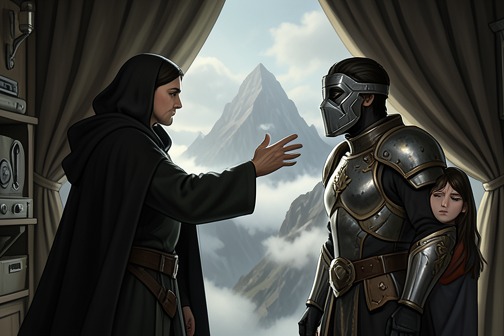
[Alis](entity:character-recall-character-alis-74f8cda469bc) explains that [Amarantha](entity:character-recall-character-amarantha-652ff861d8c3) seized [Prythian](entity:location-recall-location-prythian-b4356e9ffe33) forty-nine years earlier, stole the High Lords’ powers, and bound [Tamlin](entity:character-recall-character-tamlin-29f489f93b8d) and the [Spring Court](entity:location-recall-location-spring-court-84684952d38b) beneath masks. Tamlin’s father’s alliance with [Hybern](entity:location-recall-location-hybern-8d5acc758350) made the curse especially cruel, and Tamlin had refused Amarantha as a lover.
The curse required a human girl with hatred for faeries to kill one of Tamlin’s sentries in an unprovoked attack, then fall in love with him and declare that love sincerely before the forty-nine-year deadline. Feyre realizes that [Andras](entity:character-recall-character-andras-85fe2dc6df6c) was deliberately sent across [The Wall](entity:location-recall-location-the-wall-884e0fefc9cc) as the final sacrifice.
during Alis’s explanation
Amarantha’s Rule Revealed
[Alis](entity:character-recall-character-alis-74f8cda469bc) reveals that [Amarantha](entity:character-recall-character-amarantha-652ff861d8c3) was [Hybern](entity:location-recall-location-hybern-8d5acc758350)’s former general and that she conquered [Prythian](entity:location-recall-location-prythian-b4356e9ffe33) through deception, stolen magic, and terror. She now rules from [Court Under the Mountain](entity:organization-recall-organization-court-under-the-a8de588f64ee), gathering the most vicious faeries for an eventual assault on the [Mortal Realm](entity:location-recall-location-mortal-realm-6bb94f7eb832).
The political crisis becomes a direct threat to Feyre’s family and all humans. Feyre refuses Alis’s advice to retreat and asks to be taken to Amarantha.
that night
Feyre Enters Under the Mountain
[Alis](entity:character-recall-character-alis-74f8cda469bc) leads Feyre through an ancient cave passage into [Under the Mountain](entity:location-recall-location-under-the-mountain-bf16b0721e4d). Feyre carries a bow, daggers, and ordinary arrows, knowing that her human weapons are almost useless against [Amarantha](entity:character-recall-character-amarantha-652ff861d8c3)’s court.
The passage places Feyre inside the heart of the enemy’s power. She relies on hunting instincts, memory, and concealment as she navigates the catacombs before being caught by [The Attor](entity:character-recall-character-the-attor-98744a3e4c03).
upon entering Court Under the Mountain
Feyre Faces Amarantha
[The Attor](entity:character-recall-character-the-attor-98744a3e4c03) drags Feyre into the throne room, where [Amarantha](entity:character-recall-character-amarantha-652ff861d8c3) sits beside [Tamlin](entity:character-recall-character-tamlin-29f489f93b8d). Amarantha displays Clare’s mutilated corpse and reveals that she tortured Clare after learning the false name Feyre gave [Rhysand](entity:character-recall-character-rhysand-ff2a32d7fce7).
Feyre claims that she came to reclaim the High Lord she loves. Tamlin pretends not to know her, trying to protect her, but Amarantha recognizes the truth and offers Feyre a bargain: three deadly trials or a riddle, in exchange for Tamlin’s freedom.
the same throne-room confrontation
Feyre Accepts The Trials
Feyre agrees to [Amarantha](entity:character-recall-character-amarantha-652ff861d8c3)’s terms despite [Tamlin](entity:character-recall-character-tamlin-29f489f93b8d)’s silent warning. She negotiates that completing the trials or solving the riddle will break Tamlin’s curse and free his entire court.
The bargain becomes the structure of the final conflict. Feyre enters a contest in which intelligence, endurance, and love must overcome Amarantha’s control of magic and her power to define the rules.
after Feyre’s first beating
Lucien Heals Feyre
Feyre awakens in a dungeon cell after [Amarantha](entity:character-recall-character-amarantha-652ff861d8c3)’s servants beat her nearly to death. Lucien secretly visits, resets her broken nose, and heals what he can without revealing his intervention.
He confirms that all the High Lords are trapped [Under the Mountain](entity:location-recall-location-under-the-mountain-bf16b0721e4d) and that [Rhysand](entity:character-recall-character-rhysand-ff2a32d7fce7) has been granted a fraction of his former power. Lucien’s aid reaffirms his loyalty to [Tamlin](entity:character-recall-character-tamlin-29f489f93b8d) and his willingness to risk punishment for Feyre.
the first full moon Under the Mountain
Feyre Solves The First Task
[Amarantha](entity:character-recall-character-amarantha-652ff861d8c3) places Feyre in a muddy labyrinth with [The Middengard Wyrm](entity:character-recall-character-the-middengard-wyrm-5411ca4f67b2), a giant blind worm that hunts by scent. Feyre escapes through a narrow passage, discovers that the creature cannot see, and uses its own bones to build a ladder and a field of spikes.
She coats herself in the Wyrm’s foul remains to conceal her scent, lures it through the maze, and causes it to impale itself. Feyre survives through observation and improvisation, proving that her human hunting skills can challenge faerie monstrosity.
days after the first trial
Rhysand Heals Feyre’s Arm
Feyre’s arm remains pierced by a bone shard and becomes infected while [Amarantha](entity:character-recall-character-amarantha-652ff861d8c3) withholds treatment. [Rhysand](entity:character-recall-character-rhysand-ff2a32d7fce7) visits her cell and offers to heal it in exchange for one week each month at the [Night Court](entity:location-recall-location-night-court-88b1740ae5af) for the rest of Feyre’s life.
Feyre bargains the price down from two weeks to one and accepts. Rhysand heals her, but marks the bargain with an elaborate blue-black tattoo and an eye on her palm, creating a permanent bond between them.
the days after the bargain
Rhysand Protects Feyre
[Rhysand](entity:character-recall-character-rhysand-ff2a32d7fce7) stops the guards from assigning Feyre impossible chores and ensures that she receives proper food. He then brings her into his court’s public revels, paints her body with patterns matching the tattoo, and forces her to drink enchanted [Faerie wine](entity:object-recall-object-faerie-wine-8dce8d387c9a).
Feyre loses control of her memory and is made to dance and sit in Rhysand’s lap before [Amarantha](entity:character-recall-character-amarantha-652ff861d8c3)’s court. The humiliation serves Rhysand’s apparent plan to provoke [Tamlin](entity:character-recall-character-tamlin-29f489f93b8d) while also keeping Feyre alive and visibly under his protection.
during Feyre’s captivity
Rhysand’s Hidden Resistance
[Rhysand](entity:character-recall-character-rhysand-ff2a32d7fce7) privately admits that [Amarantha](entity:character-recall-character-amarantha-652ff861d8c3) enslaves him and that his apparent service protects the [Night Court](entity:location-recall-location-night-court-88b1740ae5af) and its remaining people. He explains that he kills swiftly when ordered to destroy minds, often turning commands into mercies.
He also tells Feyre that he has been manipulating appearances to preserve her and [Tamlin](entity:character-recall-character-tamlin-29f489f93b8d)’s chances. His cruelty remains real, but it is increasingly revealed as a mask worn within a larger resistance against Amarantha.
the second full moon Under the Mountain
Feyre Faces The Second Trial
[Amarantha](entity:character-recall-character-amarantha-652ff861d8c3) lowers two burning spiked grates toward Feyre and Lucien, who are separated by an iron barrier. Feyre must read an inscription and choose one of three levers before the grates crush them.
Because Feyre cannot read, the task exploits a weakness she has concealed throughout the story. Her tattooed palm becomes painfully responsive to the wrong levers, and she finally pulls the third lever, stopping the trap just before death.
immediately after the second trial
Rhysand Keeps Feyre Whole
Feyre collapses in her cell and weeps, convinced that she cannot survive the final trial. [Rhysand](entity:character-recall-character-rhysand-ff2a32d7fce7) enters, taunts her, and then uses the mental bond of their bargain to instruct her to stand, keep her face composed, and refuse [Amarantha](entity:character-recall-character-amarantha-652ff861d8c3) the sight of her breaking.
His intervention does not erase the cruelty between them, but it keeps Feyre from psychologically collapsing. Their antagonistic alliance becomes essential to her survival.
the night before the final trial
Tamlin And Feyre Reunite
[Tamlin](entity:character-recall-character-tamlin-29f489f93b8d) secretly meets Feyre in a passage away from the throne room. They embrace and make love in the knowledge that the next day may bring Feyre’s death.
[Rhysand](entity:character-recall-character-rhysand-ff2a32d7fce7) interrupts before they can be discovered together, using a forced kiss to make it appear that he, rather than Tamlin, has been with Feyre. The deception protects both lovers from [Amarantha](entity:character-recall-character-amarantha-652ff861d8c3)’s immediate retaliation.
later that same night
Rhysand Reveals His Motives
[Rhysand](entity:character-recall-character-rhysand-ff2a32d7fce7) admits that his public cruelty and treatment of Feyre are designed to provoke [Tamlin](entity:character-recall-character-tamlin-29f489f93b8d)’s rage and preserve the possibility of rebellion. He reveals that [Amarantha](entity:character-recall-character-amarantha-652ff861d8c3) targeted him because his father killed Tamlin’s father and brothers.
Rhysand insists that his true goal is to free the [Night Court](entity:location-recall-location-night-court-88b1740ae5af) and all of [Prythian](entity:location-recall-location-prythian-b4356e9ffe33). Feyre recognizes that, despite his methods, he has repeatedly acted to keep her alive.
the third full moon Under the Mountain
The Final Trial Begins
[Amarantha](entity:character-recall-character-amarantha-652ff861d8c3) brings Feyre before the entire court and presents three hooded captives. She commands Feyre to kill each one with an [Ash Wood](entity:concept-recall-concept-ash-wood-226e64a28bb2) dagger, promising freedom if she completes the task.
Feyre understands that the trial is designed to force her to become what she once was: a human who could kill faeries out of necessity. This time, however, the demanded murders are deliberate sacrifices for the freedom of an entire realm.
during the third trial
Two Faeries Are Killed
[Amarantha](entity:character-recall-character-amarantha-652ff861d8c3) unmasks the first two captives, a young male and a young female. Feyre hesitates, but the male begs until she lunges and kills him; the female calmly recites a death prayer and asks Feyre to end her pain.
Feyre kills the second captive as well, suffering a profound moral rupture. Her survival now depends upon accepting that love and liberation may require acts she will never be able to forgive herself for committing.
the final moment of the third trial
The Stone-Hearted Captive
The third captive is revealed to be [Tamlin](entity:character-recall-character-tamlin-29f489f93b8d). [Amarantha](entity:character-recall-character-amarantha-652ff861d8c3) claims that Feyre can free him by killing him, then offers her the alternative of dying and leaving [Prythian](entity:location-recall-location-prythian-b4356e9ffe33) enslaved.
Feyre recalls repeated references to Tamlin’s heart of stone and realizes that Amarantha cannot risk presenting an unkillable captive unless the true solution lies in piercing the curse, not the body. She trusts the clues Tamlin deliberately left for her.
the final trial’s climax
Feyre Solves Amarantha’s Riddle
Feyre identifies the answer to [Amarantha’s riddle](entity:expression-recall-expression-amarantha-s-riddle-0cce2c0f815a) as love. She understands that the riddle describes a force sought by some, rejected by others, capable of blessing the brave and slowly destroying the scornful.
The answer confirms that Feyre’s love for [Tamlin](entity:character-recall-character-tamlin-29f489f93b8d) is the final key to the curse. She stabs Tamlin with the [Ash Wood](entity:concept-recall-concept-ash-wood-226e64a28bb2) dagger, but the blade strikes his stone heart and bends, proving that she has completed the condition without killing him.
immediately after Feyre completes the trials
Amarantha Breaks The Bargain
[Amarantha](entity:character-recall-character-amarantha-652ff861d8c3) refuses to release Feyre and the [Spring Court](entity:location-recall-location-spring-court-84684952d38b), exploiting a loophole in the wording of the bargain. She attacks Feyre with overwhelming magic and tortures her body and mind, demanding that Feyre deny loving [Tamlin](entity:character-recall-character-tamlin-29f489f93b8d).
Feyre refuses to recant. In the midst of the torture, she speaks the riddle’s answer aloud and asserts her love, forcing Amarantha to confront the truth that her own bargain has been fulfilled.
the climax of the final trial
Amarantha Dies
[Tamlin](entity:character-recall-character-tamlin-29f489f93b8d)’s curse breaks when Feyre declares her love, restoring his full power. He transforms into his beast form, attacks [Amarantha](entity:character-recall-character-amarantha-652ff861d8c3), and kills her by driving a sword through her head before tearing out her throat.
[Rhysand](entity:character-recall-character-rhysand-ff2a32d7fce7) also attacks Amarantha, confirming his rebellion, while faeries and [High Fae](entity:creature-recall-creature-high-fae-9c56a6f4e300) turn against her guards. Her death ends the central tyranny that has ruled [Prythian](entity:location-recall-location-prythian-b4356e9ffe33) for forty-nine years.
immediately after Amarantha’s death
Prythian Is Liberated
With [Amarantha](entity:character-recall-character-amarantha-652ff861d8c3) dead, the captive courts rise against her remaining forces. The High Lords recover their powers, the masks lose their authority, and the courts are no longer bound to Amarantha’s rule.
[Tamlin](entity:character-recall-character-tamlin-29f489f93b8d) holds Feyre’s broken body while the other High Lords contribute magical power to restore her. Their collective act marks the formal liberation of [Prythian](entity:location-recall-location-prythian-b4356e9ffe33) and recognizes the sacrifice Feyre made for every court.
moments after Amarantha’s death
Feyre Is Resurrected
Feyre awakens after the High Lords pour fragments of their power into her body. Her mortal body has become [High Fae](entity:creature-recall-creature-high-fae-9c56a6f4e300), granting her immortality, heightened senses, and extraordinary physical strength.
The transformation saves her life but does not heal her conscience. Feyre remains haunted by the two faeries she killed and by the gap between her new immortal body and the human heart that still feels their deaths.
later that day
Tamlin Reveals His Face
[Tamlin](entity:character-recall-character-tamlin-29f489f93b8d) brings Feyre to a quiet room and heals her remaining injuries. For the first time, she sees his unmasked face and finds that it matches the image she had imagined while learning his personality and desires.
Their reunion is tender but shadowed by Feyre’s guilt. She refuses to discuss the two executions, choosing instead to seek physical closeness and postpone confronting the moral consequences of her survival.
before Feyre leaves Under the Mountain
Rhysand Takes His Due
[Rhysand](entity:character-recall-character-rhysand-ff2a32d7fce7) summons Feyre to a balcony and reminds her that their bargain still requires her to spend one week each month at the [Night Court](entity:location-recall-location-night-court-88b1740ae5af). He speaks more honestly about his love of flight and the losses caused by [Amarantha](entity:character-recall-character-amarantha-652ff861d8c3)’s rule.
Rhysand tells Feyre that he helped because he refused to let her fight or die alone. His reaction to her newly transformed face suggests that he has sensed something unexpected in their bond, though he disappears before explaining it.
the day after Amarantha’s death
The Courts Leave Under The Mountain
The surviving [High Fae](entity:creature-recall-creature-high-fae-9c56a6f4e300) destroy and seal [Court Under the Mountain](entity:organization-recall-organization-court-under-the-a8de588f64ee). Feyre and [Tamlin](entity:character-recall-character-tamlin-29f489f93b8d) depart through the ancient cave route, leaving behind [Amarantha](entity:character-recall-character-amarantha-652ff861d8c3)’s ruined court and the evidence of her long tyranny.
Their escape ends the immediate ordeal, but the political future of [Prythian](entity:location-recall-location-prythian-b4356e9ffe33) remains unsettled. The High Lords must rebuild their courts while the threat from [Hybern](entity:location-recall-location-hybern-8d5acc758350) and the [Mortal Realm](entity:location-recall-location-mortal-realm-6bb94f7eb832) remains unresolved.
the same day
Homecoming To Spring Court
Feyre and [Tamlin](entity:character-recall-character-tamlin-29f489f93b8d) emerge into the spring-green lands of the [Spring Court](entity:location-recall-location-spring-court-84684952d38b). Atop a hill, they see [Tamlin's Estate](entity:location-recall-location-tamlin-s-estate-7780a8049e88) restored to life, with [Alis](entity:character-recall-character-alis-74f8cda469bc) and her nephews safe and Lucien calling them to dinner.
Feyre calls the estate home and takes Tamlin’s hand. Although she knows that grief and guilt await them, she chooses to face the future with him rather than retreat from the world she has helped liberate.